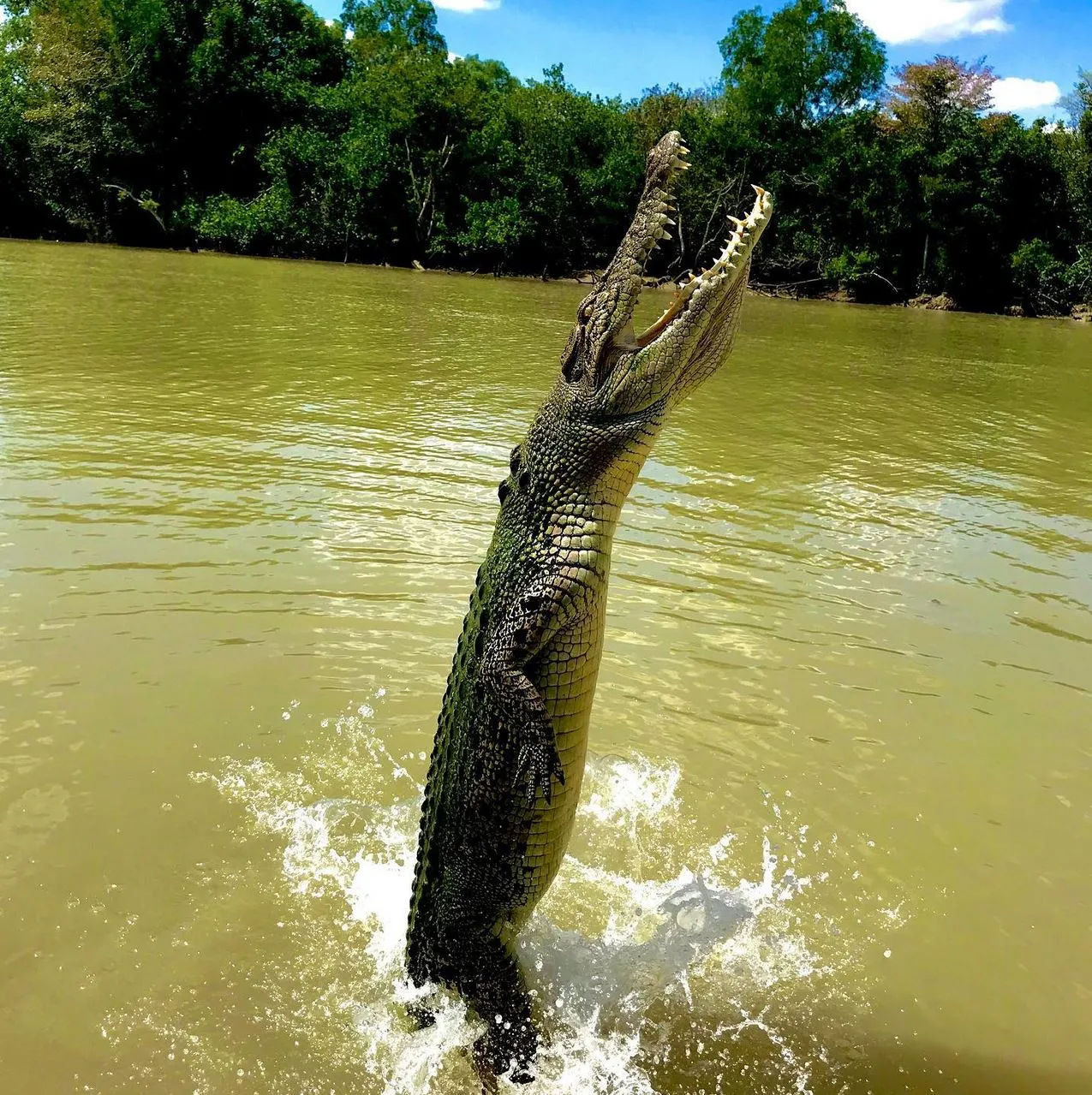
Can Most Travellers Really Handle a Jumping Crocodile Cruise? It’s a Question We Get A Lot, Especially When You Picture a 4 metre Crocodile Shooting out of the Adelaide River like a Pro Athlete auditioning for the Olympics. When I first went on a Jumping Crocodile Cruise almost 20 years ago, I remember thinking – surely not everybody can hang with the raw energy of the Top End? But here’s the thing – if you can sit without any issues, stick to some super simple safety advice, and actually want to see some real Aussie wildlife up close in a pretty untamed environment, then – yes – most travellers are more than welcome to come along and join in the fun.
I’ve spent years showing people around the Northern Territory – from dusty back roads to scenic river tours – and I can tell you from hard-won experience, a Jumping Crocodile Tour is probably one of the most accessible bucket-list experiences out here. You don’t need to be super fit, or some croc wrangling wizard, nope – just a bit of curiosity, some basic respect for the land, and maybe a bit of willingness to get a bit warm during the heat of the day.
Contents
- 1 What These Cruises Are Actually Like
- 2 What Really Happens On The Adelaide River
- 3 A Quick Lowdown On Adelaide River Croc Cruises
- 4 Safety: The Top Concern (And for Good Reason)
- 5 When To Go: How the Seasons Play Out in Real Life
- 6 Choosing The Right Operator – Don’t Even Think About Taking A Tour That Isn’t Right
- 7 Things That Will Blow Your Mind
- 8 My No-Nonsense Traveller Tips
- 9 Final Thoughts: Should You Do It? (Just go for it)
- 10 FAQ
What These Cruises Are Actually Like
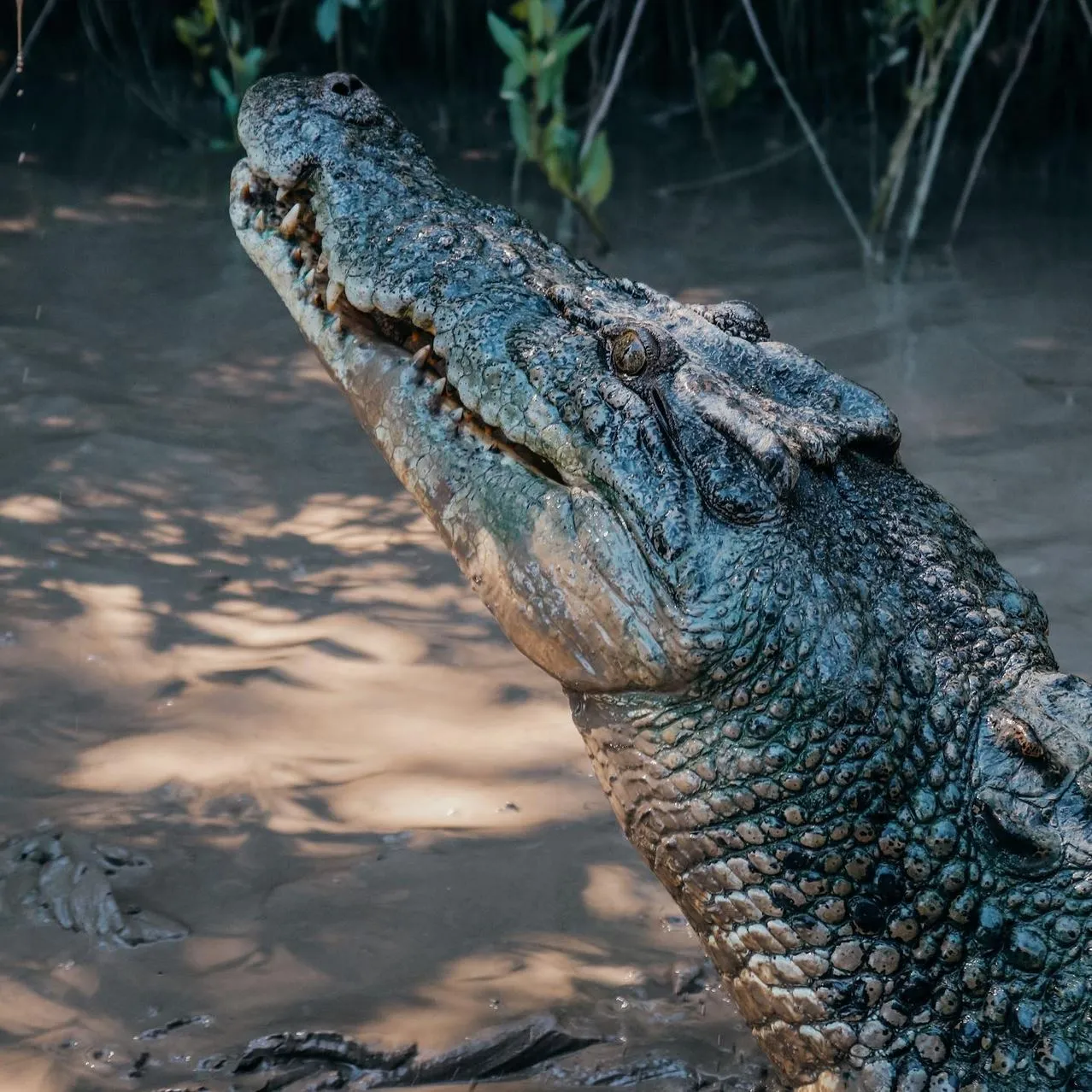
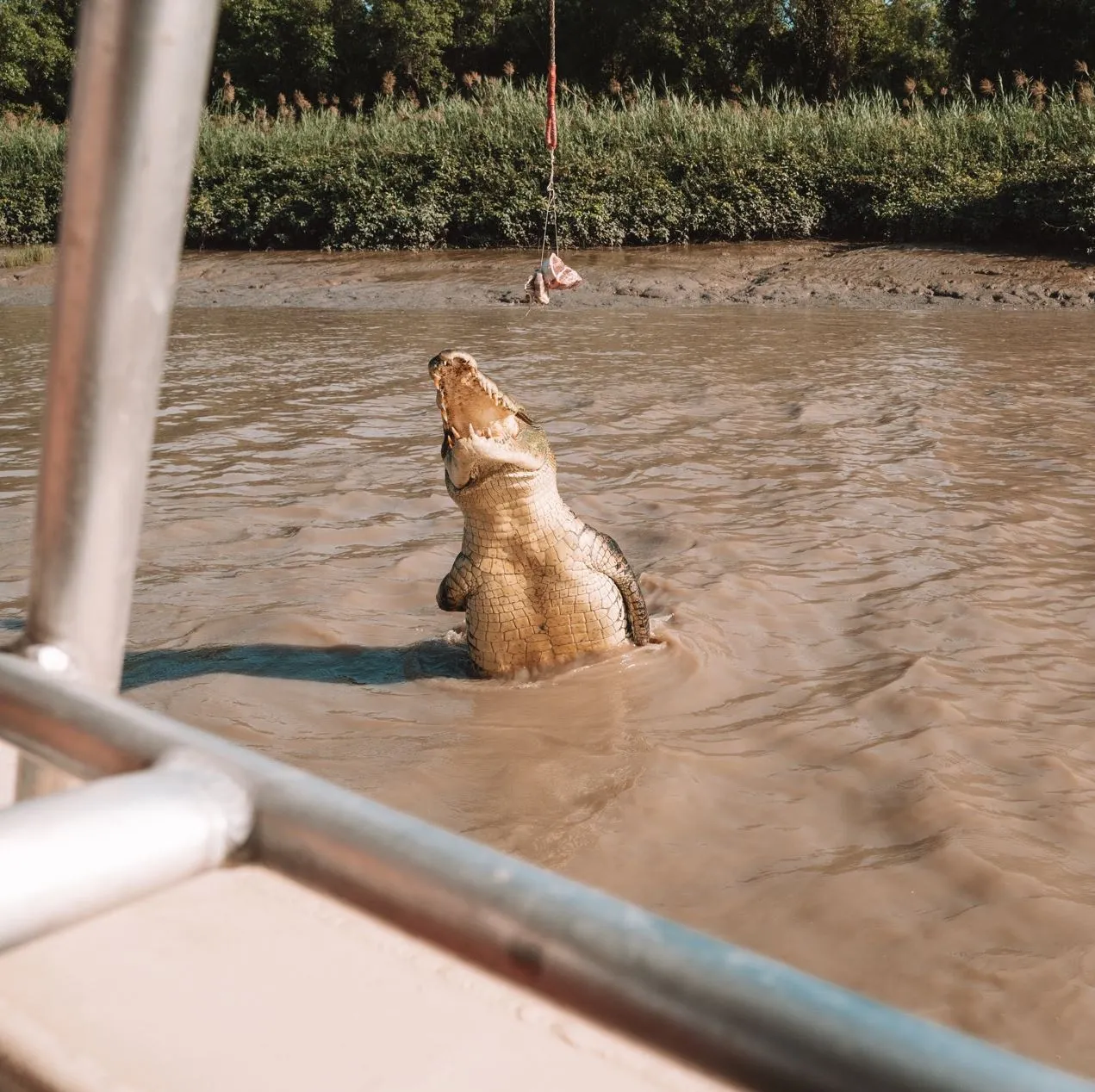
Most travellers get a big surprise when they see just how comfortable and well organised a Jumping Crocodile Cruise actually is – it’s not your dodgy old tinny in the middle of the river. You’re on a sturdy boat with aircon, comfy seats and some top-notch guides doing all the hard lifting – like those famous buffalo-meat demos that show how these saltwater crocs can shoot straight up into the air.
These cruises are suitable for all ages – I’ve seen the most excited kids, happy retirees, honeymooners, and backpackers all sitting there together watching wild crocodiles roll up to the boat like they’re sizing up the whole bunch. As long as you can get on board and stay seated for the length of the trip, you’re golden, and many small group tours even make special arrangements for travellers with mobility issues – just check with the tour operator in advance.
Loads of travellers choose to do a Jumping Crocodile Tour when they want an NT adventure without needing a 4WD or trekking across the outback.
What Really Happens On The Adelaide River
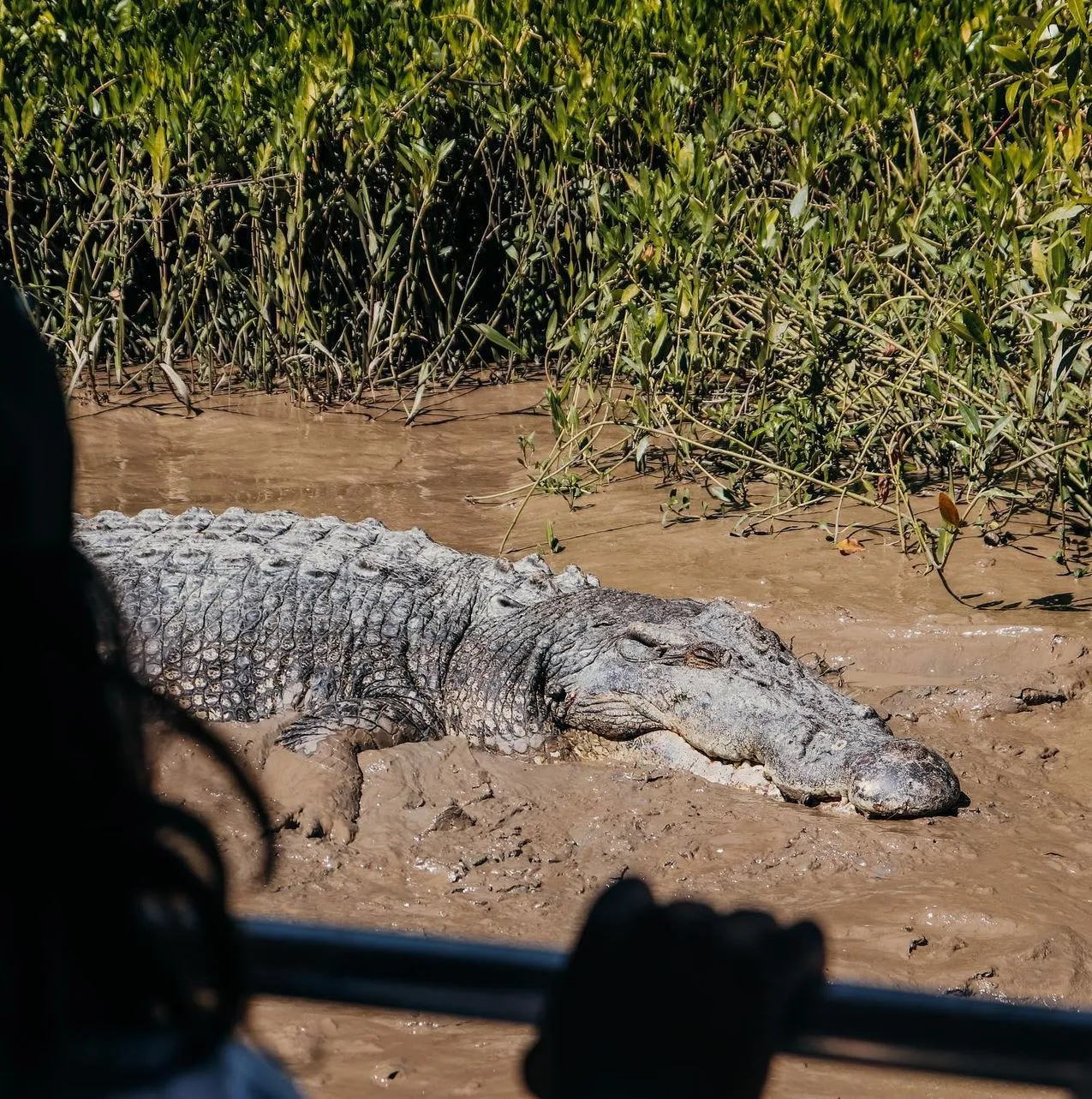
The Adelaide River is one of those beloved hotspots in the NT where you can spot all sorts of wildlife – particularly saltwater crocodiles. When you go on a Jumping Crocodile Cruise, here’s what you can reasonably expect from the experience:
- The guide’s got a bit of a relationship with the crocodiles – they’ve got names, and some of them are pretty famous in the local scene.
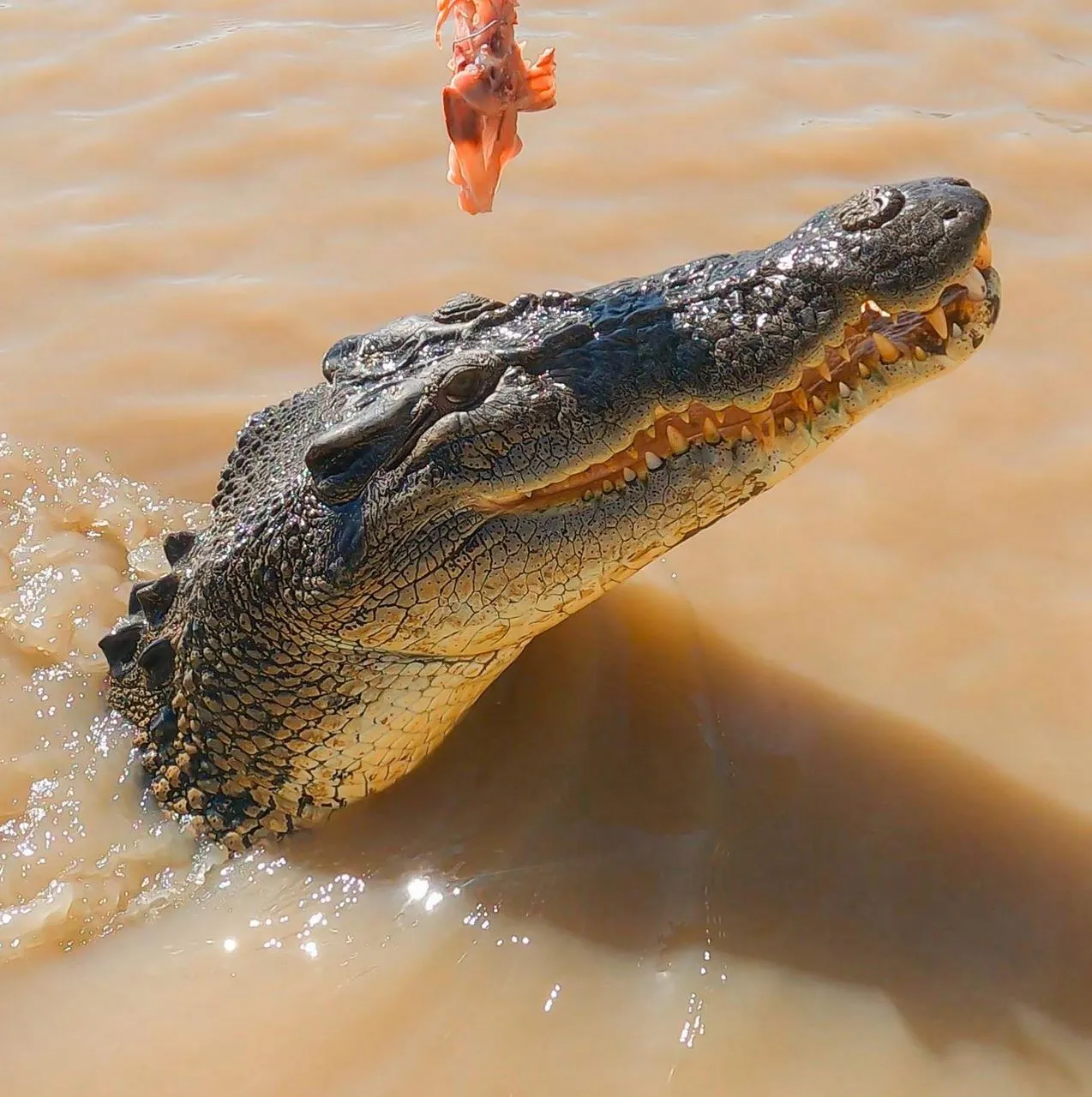
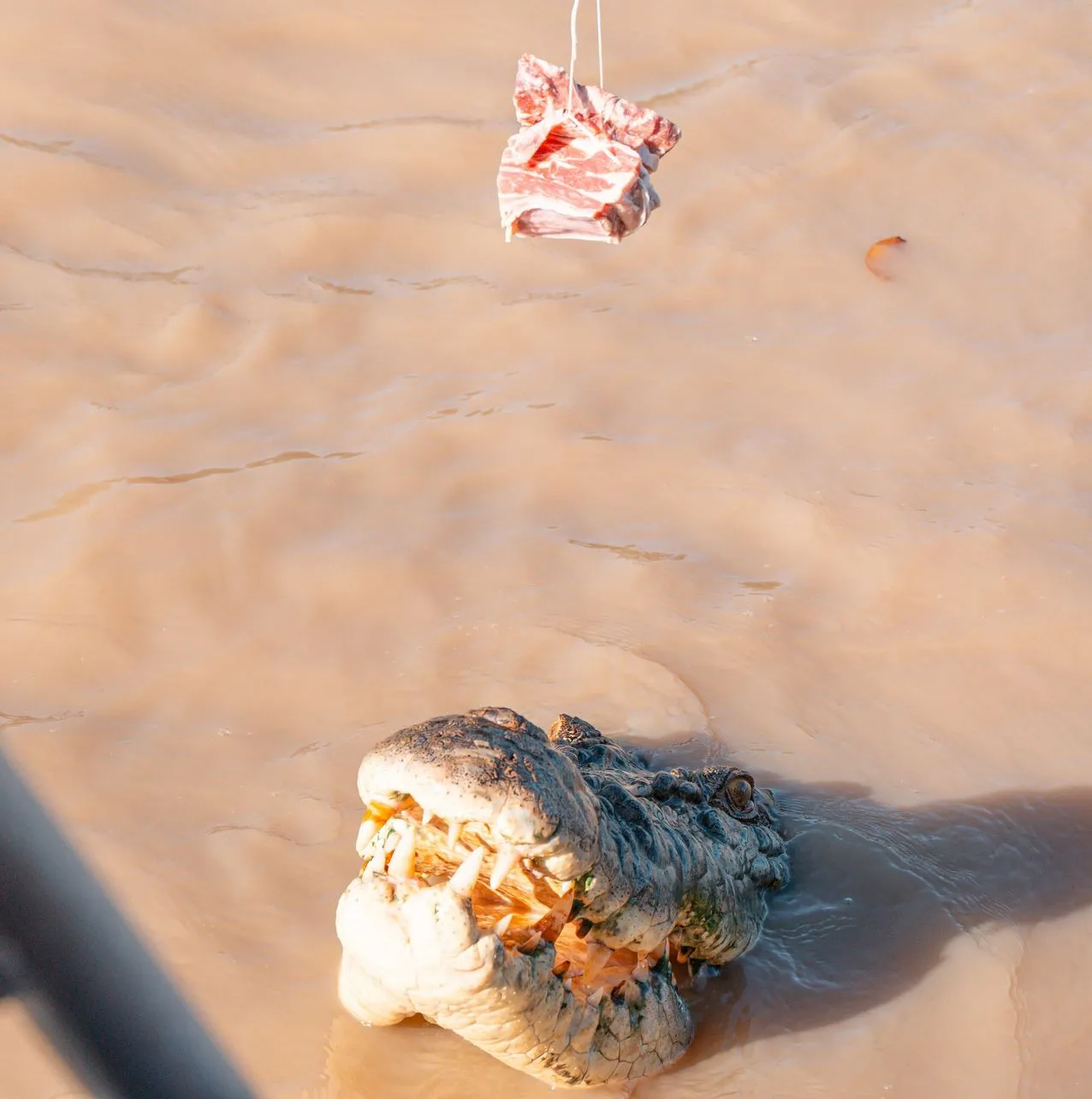
- They drop a piece of buffalo meat into the water on a line & they can control exactly how it reaches the bottom.
- Bang! The croc has a good look around, and then – up it jumps.
- Your camera’s clicking away, jaws drop in amazement – and the croc looks like it’s saying: “This is MY kingdom, you’re just welcome to visit for a bit”
This is not some zoo exhibit – no way. You’re seeing wild crocodiles behaving naturally in their natural habitat. They jump out of the water to catch food like birds and flying foxes – and sometimes even wallabies that are a bit too curious.
As you’re on the lookout for crocs, you’re going to see a whole load of other Aussie birds flying overhead – sea eagles, kites, kingfishers, jabirus. The Adelaide River is right in the middle of a central bird sanctuary, so you get a bonus wildlife tour whether you were looking for one or not.
On all the Jumping Crocodile Tours I’ve either led or been on, there’s always someone who “isn’t really into birds” who ends up being absolutely fascinated after a sea eagle comes swooping by like a fighter plane.
A Quick Lowdown On Adelaide River Croc Cruises
Statistics are sourced from NT Tourism, NT Parks & Wildlife, and operators that have run these cruises for a long time (last valid update was Jan 2026).
| Category | Stat / Detail | Notes |
|---|---|---|
| Estimated saltwater crocodile population (NT) | ~100,000+ | NT Government wildlife monitoring |
| Croc density in Adelaide River | 4–5 crocs per km | One of the highest in the Top End |
| Typical cruise length | 1–1.5 hrs | Varies by cruise operator |
| Average tour group size | 20–45 passengers | Smaller options available |
| Average croc jumps per tour | 3–10 | Depends on season & temperature |
| Bird species commonly sighted | 10–25 | Dry season peak: May–Aug |
| Accessibility rating | Moderate | Boarding assistance available |
| Aboriginally owned cruise options | Increasing each year | NT operators expanding cultural offerings |
Safety: The Top Concern (And for Good Reason)
Let’s set the record straight: when it comes to reputable crocodile cruises in the Northern Territory, safety’s always been the top priority. The operators here aren’t winging it and instead operate under strict guidelines – Wildlife Permits, environmental regulations and industry-wide standards that are based on decades of Top End tourism experience.
On a Jumping Crocodile Cruise, safety is all about the details:
- Boats are built to keep people a safe distance away from the river, just in case.
- Guides are trained annually in crocodile behaviour and risk assessment.
- The feeding demonstrations are 100% in line with the regulations.
- And let me be super clear, people – no one is allowed to put a hand out of the boat.
- We monitor the tides, weather, river levels, and crocodile movements daily.
I have been around the block a few times, running tours and working with other operators like Autopia Tours, and I can tell you that safety is never a secondary concern. This isn’t a marketing line; it’s the foundation on which everything is built.
Doing a Jumping Crocodile Tour gives you a front row seat to the action, while keeping you safely in your seat from start to finish.
When To Go: How the Seasons Play Out in Real Life
Dry Season (May–October)
This is when the Top End really comes alive. It’s cooler, the river’s lower, and the crocs tend to be a lot easier to predict.
Expect:
- Crisp, cool mornings
- Blue skies most of the day
- The cruise runs on a pretty reliable schedule
- You’re more likely to see a good number of jumps because the crocs congregate in deeper water.
- Loads of wildlife activity to boot.
Wet Season (November–April)
It’s a crazy, beautiful time of year.
Expect:
- Humidity that almost slaps you in the face, it’s so thick
- Storms can pop up out of nowhere
- The water’s right up, so the jump frequency is lower
- Occasionally, the cruises get cancelled, but that’s only because safety comes first.
The wet season doesn’t necessarily make the cruises any safer or less safe; it’s just more variable. If you do book a Jumping Crocodile Cruise during this time, just be prepared to roll with the punches.
Choosing The Right Operator – Don’t Even Think About Taking A Tour That Isn’t Right
When it comes to Top End river cruises, not all of them are created equal. Here’s what actually matters to me when I’m recommending trips to fellow travellers:
Aboriginal Owned Or Managed Tours – That’s The Real Deal
When Traditional Owners are in charge or co-designing the tour, you gain cultural knowledge that exceeds Western science. It totally changes how you see the river.
Expert Guides Who Know Their Crocs
Guides who’ve been watching these guys for years can give you so much more than just a throwing-some-facts-at-you tour. You gain real insights into their temperament, habits, history, and even their family lineage.
A Little Bit Of Luxury Goes A Long Way
I mean it – on a 34-degree day when the sun screen is running into your eyes, air conditioning is a real lifesaver.
Small Groups Are Where It’s At
It means you get to see more, there’s plenty of elbow room, the commentary is much quieter, and the stories are much more personal.
Ethical Wildlife Practices Matter
Choose operators who work closely with NT Parks & Wildlife and actually follow the feeding protocols.
A lot of travellers will add a Jumping Crocodile Tour to their itinerary after hearing how much people in the know love these well-run, wildlife-respecting operators.
Things That Will Blow Your Mind
- Those crocodiles are a hell of a lot bigger than you expected.
- Nothing can prepare you for the moment when a five-metre saltie suddenly surfaces right next to the boat,
- Birdwatching becomes seriously addictive,
- Even if you didn’t know the first thing about magpies before this, you’ll end up pointing out sea eagles by the end of the day,
- The river is actually a lot calmer than you probably imagined,
- The jump is explosive, but everything leading up to it is so patient and precise.
And don’t even get me started on the weather – if it’s hot, it’s seriously hot. Make sure you drink heaps of water like you’re driving across the Gibb River Road in the middle of the day.
On almost every Jumping Crocodile Cruise, there’s a moment where the whole boat falls silent – usually when the crocodile locks eyes with the group.
My No-Nonsense Traveller Tips
- Wear lighter colours – those crocs can spot contrast like nobody’s business,
- Bring a zoom lens – your phone just isn’t going to cut it,
- Avoid strong perfumes like the plague – mozzies go crazy for them,
- Keep a reasonable distance from the water’s edge at the causeway entrance,
- Listen to your guide – they know each croc’s personality, from chill to complete psycho,
- Drink water constantly, especially in the wet season,
A Jumping Crocodile Tour is a great way to pack a load of NT wildlife, local insight and authentic Top End atmosphere into a single morning or afternoon.
Final Thoughts: Should You Do It? (Just go for it)
Here are my two cents after all these years of travel and countless days on the river: yes, most anyone can have a blast and stay safe and comfortable on a jumping crocodile cruise. A Jumping Crocodile Cruise is the real deal – it’s a wildlife encounter that’s super thrilling, teaches you a thing or two, is embedded in local culture, and’s perfect for all ages.
If you’re organising a Northern Territory circuit, we run some great small groups through this region at Get Lost Travel. I’d be happy to give you a leg up on the latest and greatest or help put together a stress-free trip to the Top End.
Got a particularly great memory from a croc encounter or spotted a bird you’d never seen before out at the Adelaide River? Share it in the comments – I love hearing about these moments.
FAQ
Are jumping croc cruises a good idea for older folks?
The answer is yes. With seating that lets you take it all in, controlled conditions, and a knowledgeable guide to keep an eye on the action, most cruises are suitable for older travellers.
Do i need some special permit to join the cruise?
Not a thing. The operators are all licensed and have the necessary wildlife permits, so your job is just to sit back and enjoy.
Are you guaranteed to see crocs jump?
Well, most of the dry season cruises will give you a few good jumps to look at, and even in the wet season, you’re pretty much sure to see action.
Can I take an Aboriginal-owned cruise?
You bet. These offer a deeper understanding of the river, the country, and the crocs themselves.
Can the little ones join in the fun on a Jumping Crocodile Tour?
Absolutely. We get loads of families coming along, and the kids love the action.